The Opeongo Line
The original thought behind The Opeongo Line is said to have had something to do with military defense against the United States. (The war of 1812 was about 30 years earlier.)
When the line truly became a reality in the 1850s, it was one of several settlement roads in what was to become Ontario.
Many of these settlement roads lured settlers with the prize of free land and wild exaggerations about the great farming to be found. (in and around all the rocks ???)
The Opeongo Line was fortunate enough to be more than a settlement road. It led many an Ottawa Valley Lumber Baron and his lumber camps to some legendary White Pine Forests.
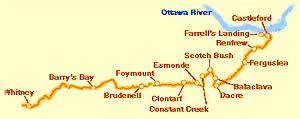 The word "Opeongo" probably means "sandy at the narrows" and comes from the Algonquin term "Ope au wingauk".
The Opeongo line starts at Farrell's Landing on the Ottawa River. It's final destination was to have been Opeongo Lake in Algonquin Park, but it never got that far. It fades away somewhere near Whitney Ontario.
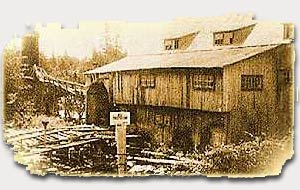 Giant White Pine Forests and Lumber camps drew many an adventurous lumberjack up the Line. Lodging and services sprang up along the way, and farming homesteads tried to hold on to the rough and rocky terrain.
When lumber finally dwindled, many settlers gave up on the sparsely soiled land. The once busy road began to fade into a quiet country lane and that is what you'll find today.
Many of these "Lines" have completely disappeared, but the Opeongo Line survived. (although some parts of it are deserted)
Many of our early settlers must have been quite stubborn, because they refused to leave the land they had settled. Some of these communities still exist and some don't, and some just hold on because a few families still live where hundreds once lived.
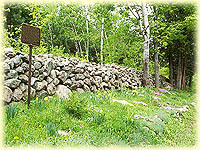 This remarkable path of history is still very visible. Ghost towns, abandoned mills, old stone fences, the odd vacant school or church...and the faint echo of time.
These echos can still be heard in the remnants of places like Balaclava, Esmonde, Clontarf, Newfoundout and Ferguslea.
One place, the village of Foymount just keeps returning from the past. It was a military base in the 1970s...closed down in the 80s...bounced back in the 90s, and now is the home of a world wide outdoor clothing manufacturer. (Sierra Designs)
Strict Standards: Non-static method Events::SendEvent() should not be called statically in /home2/jamespel/public_html/eganville/plugins/prefilter.precompilefunc.php on line 84
Strict Standards: Non-static method Events::ListEventHandlers() should not be called statically in /home2/jamespel/public_html/eganville/lib/classes/class.events.inc.php on line 104
Strict Standards: Non-static method Events::SendEvent() should not be called statically in /home2/jamespel/public_html/eganville/plugins/postfilter.postcompilefunc.php on line 84
Strict Standards: Non-static method Events::ListEventHandlers() should not be called statically in /home2/jamespel/public_html/eganville/lib/classes/class.events.inc.php on line 104
In 2006, the Township of Bonnechere Valley (the Township) initiated a study under the Environmental Assessment Act (EAA) to develop a long-term (25-year) strategy that will best meet the needs of the municipality with respect to the management of municipal solid waste generated within its boundaries.
Warning: Creating default object from empty value in /home2/jamespel/public_html/eganville/modules/CGExtensions/CGExtensions.module.php on line 514
 |  |  |  |  |  |  |
|---|---|---|---|---|---|---|
 |  |  |  |  | ||
 |  |  |  |  |  |  |
 |  |  |  |  |  |  |
 |  |  |  |  |  |  |
 |  |  |  | |||